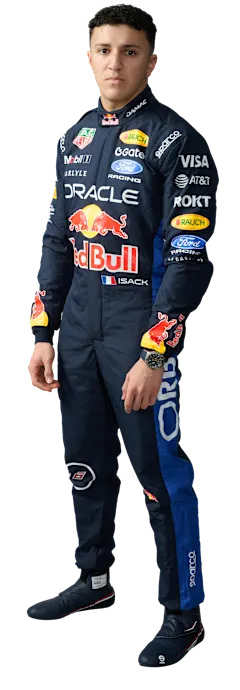
P13 in the championship after four rounds, four points on the board, and the heaviest car in the paddock to learn on the fly. That's where Isack Hadjar sits as the 2026 season finds its footing, and it's worth saying out loud: the second Red Bull has been a graveyard for promising careers for the better part of half a decade. Hadjar isn't drowning. He isn't quite swimming, either.
Four points through four rounds is the kind of return that gets read two different ways depending on who's holding the clipboard. If you grade him against the senior car's pedigree, it's thin. If you grade him against the recent history of drivers parachuted into that cockpit alongside a generational talent, it's a foothold. Hadjar earned this promotion on the back of a rookie campaign that convinced Milton Keynes he could handle the jump, and the early evidence suggests they weren't wrong to believe it — even if the points column doesn't yet sing.
The harder truth is the one the regulation reset has imposed on everyone. A brand-new rulebook means every driver on the grid is, in some sense, a rookie again, and the gap between a team's lead driver and its second driver tends to widen in a transition year while engineers chase setup direction off the data of whichever car is faster on Saturday. Hadjar is being asked to develop the Red Bull and develop himself simultaneously, and four points says he's at least putting the car where it belongs on Sundays.
What to watch for next is the trendline more than the table. If Hadjar starts converting Q3 appearances into clean points finishes with any regularity, the narrative around that second seat shifts in a hurry. He has time. He has the machinery. Now he needs a weekend that announces him.